

 Español
 عربي
عربي Русский
 한국인
한국인 Português
 Türkçe
 Italiano
 Français
 German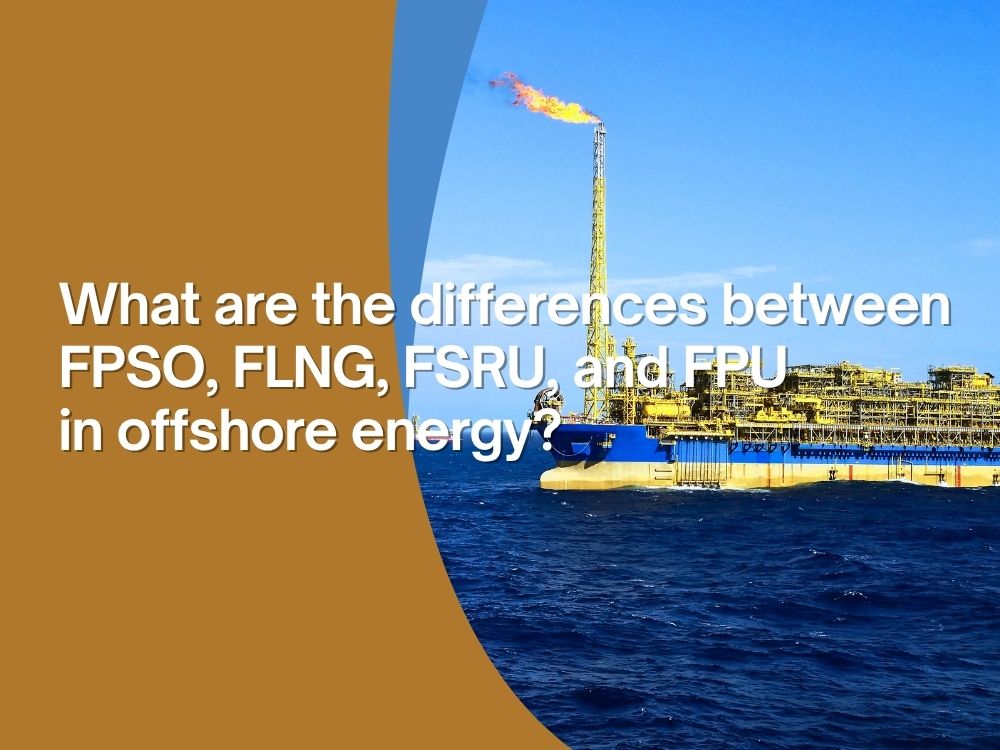
FPU is primarily responsible for offshore oil and gas production and processing. FSU stands for Floating Storage Unit, which only performs storage functions and should not be confused with FPU.
FPSO: Production Storage and Offloading Center for Offshore Oil Fields
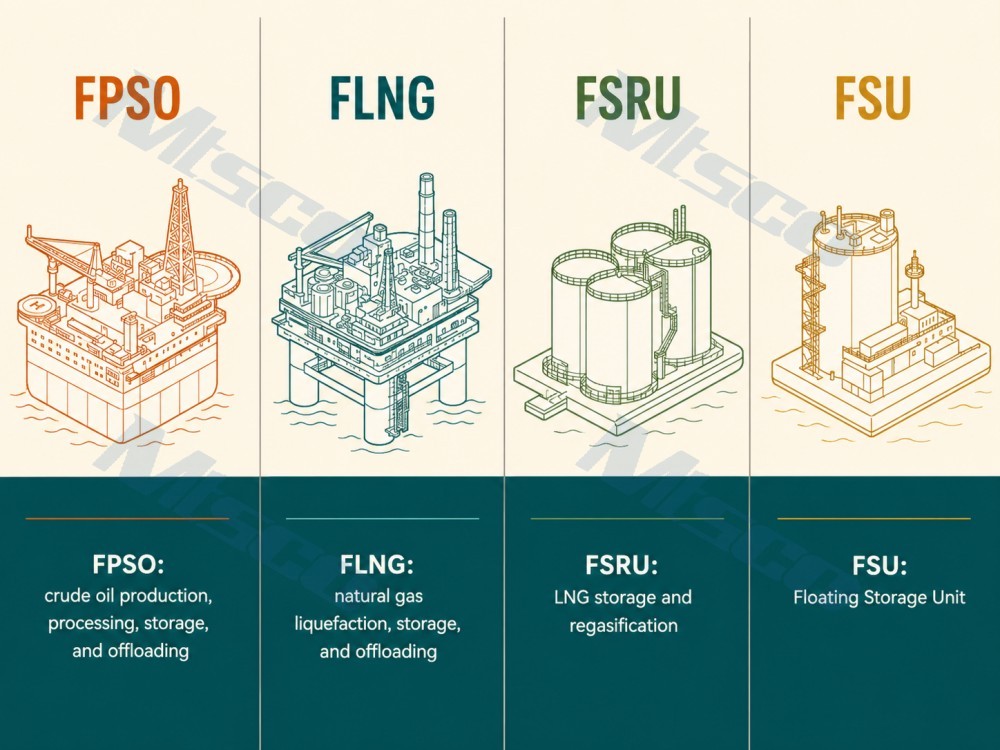
FPSO stands for Floating Production, Storage, and Offloading. It receives the oil, gas, and water mixture produced from oil wells via subsea pipelines, separates, processes, and meters it in the top module, stores the qualified crude oil in the ship's tanks, and then transports it out via shuttle tankers.
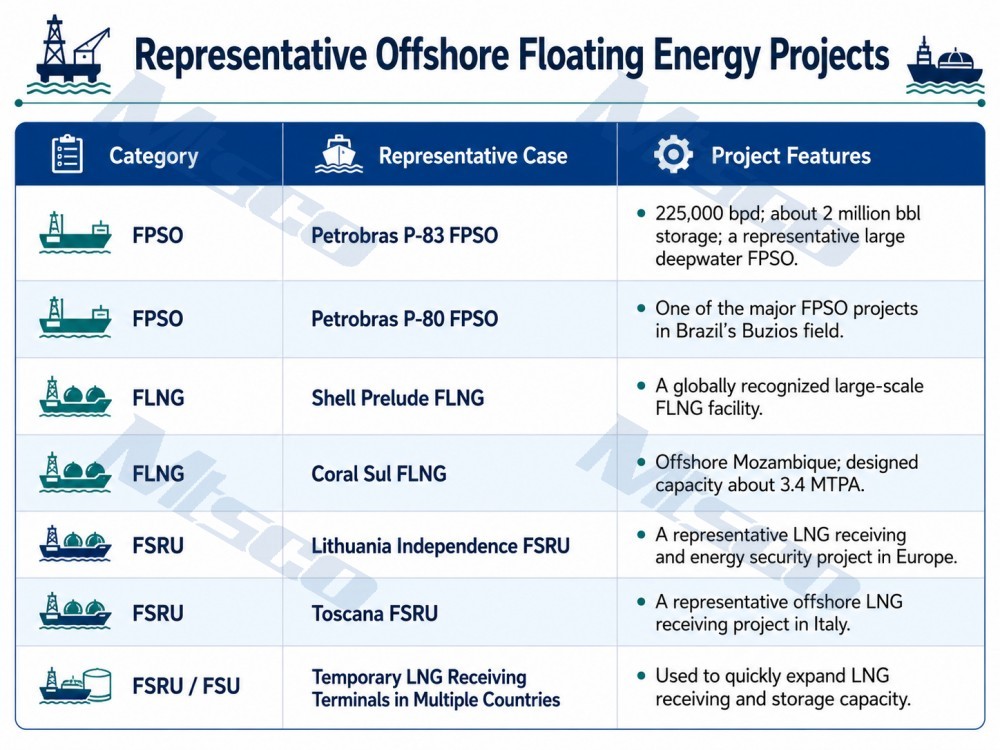
FPSOs operate under high pressure, corrosion, seawater, and vibration environments, requiring high stability in their piping systems, flange connections, instrument lines, and control lines. MTSCO has participated in supplying FPSOs for international projects such as P80, P83, and P78, offering a range of industrial metal products including seamless pipes, welded pipes, fittings, flanges, control lines, and coils. Leveraging its Factory Complex model, MTSCO can integrate resources such as stainless steel, duplex steel, and nickel alloys to provide multi-category collaborative support for offshore energy projects.
FLNG: Moving the Natural Gas Liquefaction Plant Offshore
FLNG stands for Floating Liquefied Natural Gas. It directly completes natural gas pretreatment, liquefaction, storage, and unloading at sea, making it suitable for gas field projects far from land, where pipeline construction is costly, or onshore plant construction is limited.
The core of FLNG is "production-side liquefaction." Its cryogenic systems, process pipelines, heat exchangers, and connectors require high-performance materials with excellent cryogenic properties, corrosion resistance, and weld stability. MTSCO provides stainless steel pipes, nickel alloy pipes, heat exchange tubes, flanges, and related fittings to help customers cope with cryogenic and corrosive conditions in LNG-related systems.
FSRU: Offshore LNG Receiving Terminal
FSRU stands for Floating Storage and Regasification Unit. Located at the LNG receiving terminal, it receives liquefied natural gas from LNG carriers, stores and regasifies it, and then transports it via pipeline to onshore power plants, city gas plants, or industrial users.
FLNG liquefies natural gas for export, while FSRU regasifies LNG for import into the onshore network. In FSRU projects, cryogenic pipelines, high-pressure transmission pipelines, flange seals, and quality traceability are equally critical.
FPU vs. FSU: One Responsible for Production, the Other for Storage
FPU stands for Floating Production Unit, focusing on offshore oil and gas production and processing. It typically does not have the large-scale storage and unloading capabilities of an FPSO. FSUs (French Subsidiaries) are solely responsible for storing crude oil or LNG and do not engage in complex production processes.
The differences between FPSOs, FLNGs, FSRUs (French LNG Repositories), and FPUs essentially lie in their position within the offshore energy chain. Regardless of the type of unit, reliable operation relies on a stable industrial metal pipeline system. MTSCO provides more controllable supply assurance for offshore energy projects through raw material inspection, process traceability, on-site QC, non-destructive testing, and third-party inspection support.