

 Español
 عربي
عربي Русский
 한국인
한국인 Português
 Türkçe
 Italiano
 Français
 German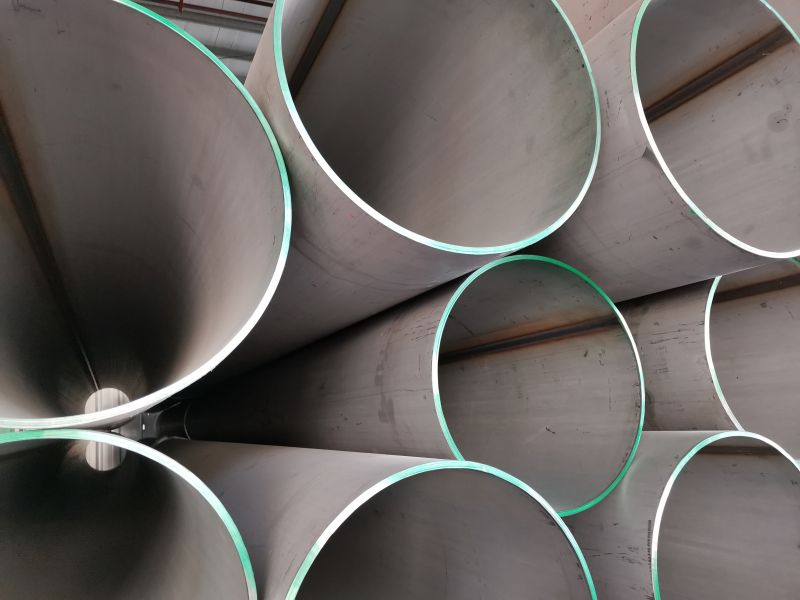
——Analysis of Resistance Welding (ERW) Technology
Electric Resistance Welding (ERW) Explained: Learn how the ERW process uses high-frequency current and pressure to efficiently produce welded pipes without filler metal, ideal for carbon steel applications.
Resistance welding, also known as Electric Resistance Welding (ERW), is one of the most widely used and efficient welding techniques in modern welded pipe manufacturing. The core principle is to utilize the physical effect of high-frequency current to achieve instantaneous forging of the weld seam through the resistance heat of the material itself and external extrusion force without adding any filler metal (welding wire).
The key to the ERW process lies in the "skin effect" and "proximity effect" of high-frequency current. When high-frequency current passes through the edge of the V-shaped opening tube blank, the current will be highly concentrated on the two edge surfaces of the steel strip. This concentrated high current generates enormous resistance heat within a very small cross-sectional area, causing the edge of the steel strip to be rapidly heated to the optimal plastic welding temperature in milliseconds. At this moment, the external extrusion roller will apply strong forging pressure, tightly pressing the two melted edges together, forming a dense and identical weld seam with the base material composition through atomic diffusion and recrystallization.
The production process of ERW steel pipes also revolves around this core technology, which is a highly automated continuous process. It roughly includes unwinding the steel coil into a steel strip, cold bending the steel strip into an open tube blank through a forming roller group, then entering the high-frequency welding zone to complete welding, and immediately performing online heat treatment, cooling, sizing, and non-destructive testing of the weld seam.
Due to its high-speed and low-cost characteristics, ERW technology occupies a dominant position in the production of small and medium-sized carbon steel pipes. However, when it comes to special materials such as stainless steel and nickel based alloys, or when there are more stringent requirements for welds, processes such as electric fusion welding (EFW) need to be used. The advanced EFW technology used by MTSCO, which combines plasma arc welding (PAW) with gas tungsten arc welding (GTAW), ensures excellent performance of the weld under any working condition by adding filler metal for fusion welding, making it a reliable choice for higher demand industrial applications.