

 Español
 عربي
عربي Русский
 한국인
한국인 Português
 Türkçe
 Italiano
 Français
 German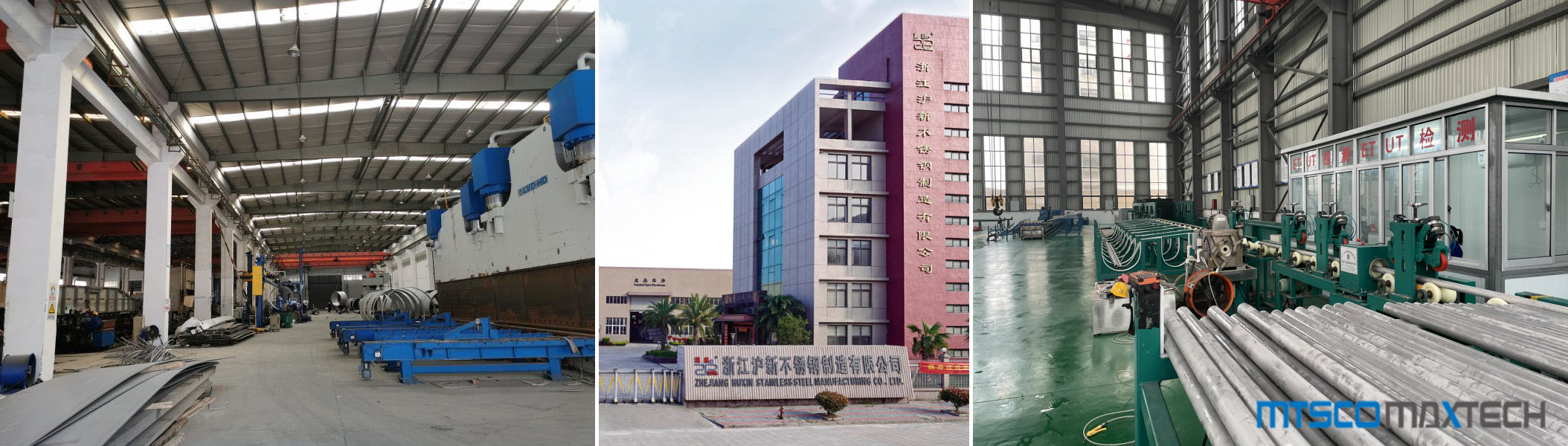
EFW/ERW Welded Pipes & Tubes
Austenitic / Duplex Steel / Nickel Alloy / Cobalt AlloyIn the vast systems of modern industry, pipelines are like 'blood vessels' and 'skeletons', undertaking the key tasks of transporting fluids, gases, and supporting structures. Among them, welded pipe has become one of the most widely used pipeline forms due to its excellent cost-effectiveness and outstanding performance. So, what exactly is welded pipe?
Welded pipe is a steel pipe made by precisely connecting the edges of steel plates or strips (known as 'strip steel' or 'coil steel') through welding technology. Its most prominent feature is the longitudinal weld seam along the length direction. This weld seam is the key to forming, and its quality directly affects the overall performance of the pipeline.
The biggest difference between welded pipes and seamless pipes lies in their production methods: seamless pipes are manufactured using integral drawing or extrusion processes, with no internal welds, and are suitable for high-pressure, high-temperature, and special environmental requirements; Welded pipes rely on welding connections to form pipelines, which are suitable for most general industrial applications. Their advantages include high production efficiency, good dimensional accuracy (especially suitable for thin-walled pipes), uniform wall thickness, more economical cost, and the ability to manufacture ultra large diameter pipes.
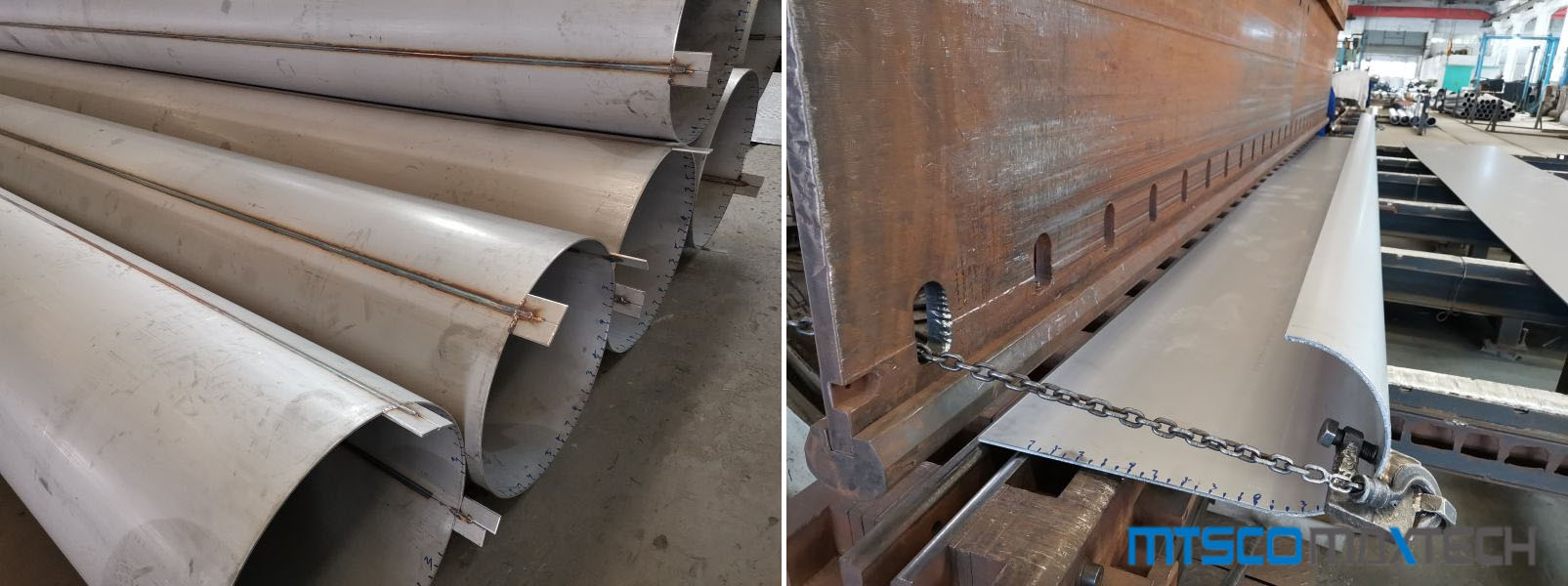
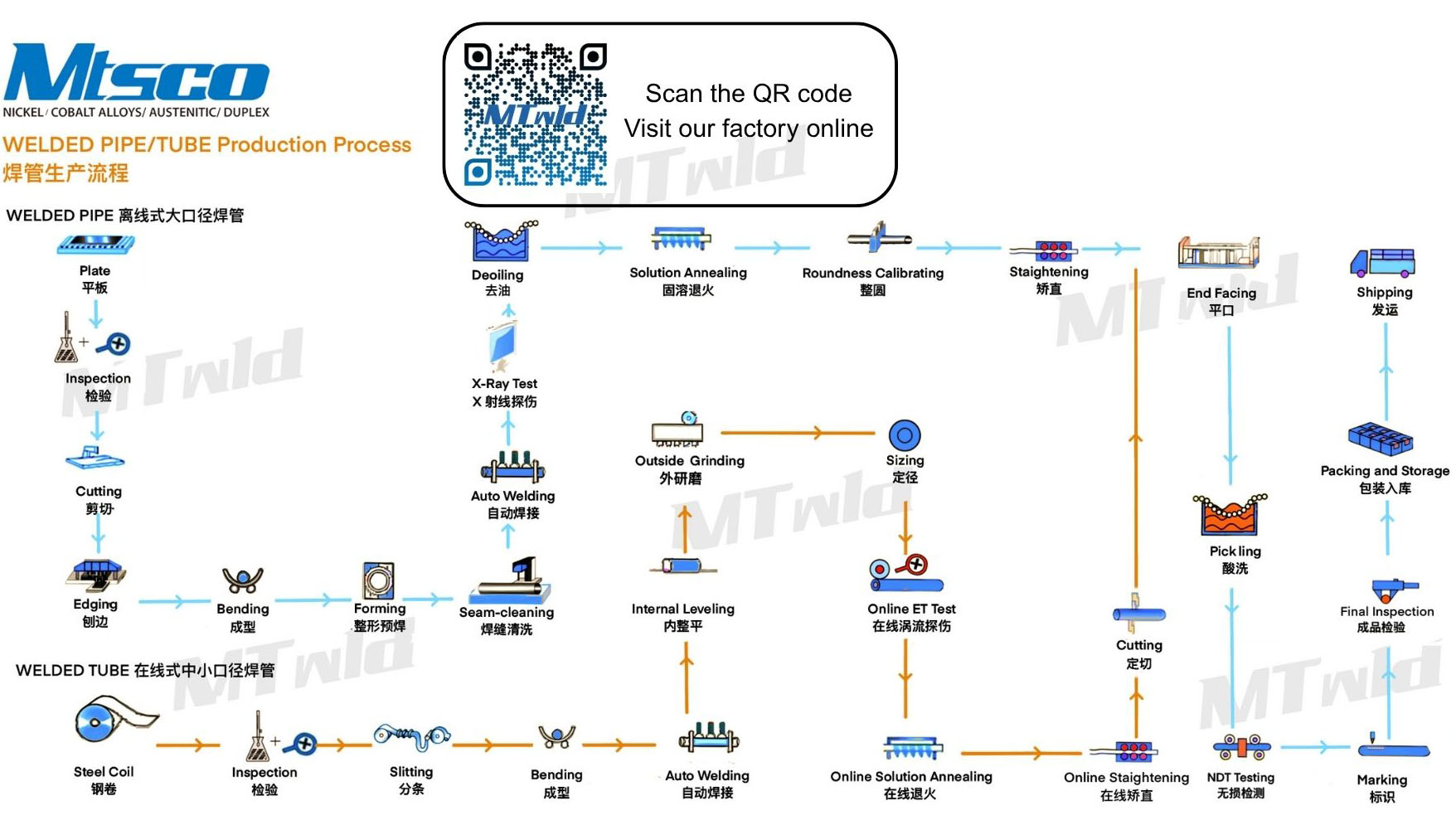
Welded pipe manufacturing is a highly automated precision process, and the production process mainly includes the following steps:
Raw material preparation: Select suitable metal sheets or coils, conduct inspections to ensure that the material quality meets welding requirements.
Forming process: The sheet is curled and formed by a mechanical device to achieve the desired pipe diameter and shape.
Welding process: Weld the formed pipe along the predetermined seam using welding equipment. The welding methods mainly include longitudinal welding and spiral welding.
Weld seam treatment: After welding is completed, the weld seam is polished, slag and surface defects are removed to ensure that the weld seam is flat and smooth.
Size adjustment: Straighten the welded pipes to ensure accurate size and meet usage requirements.
Testing and Inspection: Use ultrasonic, X-ray and other testing methods to inspect the quality of welds and pipes, ensuring that the products meet relevant quality standards.
Surface treatment and packaging: According to customer needs and specific usage environment, anti-corrosion and coating treatment shall be carried out on the pipes, and they shall be properly packaged for transportation and storage.
Industrial grade welded pipes (especially stainless steel/nickel alloy) mainly use two high-performance welding technologies:
ERW (such as high-frequency induction welding HFI): using the resistance heat generated by current to instantly heat the edge and apply pressure for welding. The advantages are extremely fast speed, high efficiency, and excellent cost, making it very suitable for large-scale production of industrial fluid conveying pipes and structural pipes.
EFW (such as TIG tungsten inert gas welding): using arc heat to melt the edge of the base metal (usually with added welding wire), forming a weld under inert gas protection. The advantage is that the weld seam has high purity, excellent quality, and a wide range of applicable alloys, especially suitable for welded pipes with high cleanliness, strict corrosion resistance requirements, or special alloys (such as high-end nickel alloys).
Longitudinal welding (straight seam welded pipe) Longitudinal welded pipes are made of metal sheets or coils, which are bent into shape and connected into pipes through longitudinal welds. This method is suitable for producing welded pipes of shorter lengths or specific sizes, with the weld position parallel to the pipeline axis, and the welding quality is relatively easy to control. All of MTSCO's welded pipes are welded using straight seam welding.
Spiral welding (spiral welded pipe) Spiral welded pipe is made by continuously curling a wide metal coil at a specific angle into a spiral shape, and then welding it continuously along the spiral line using welding equipment. This method is suitable for manufacturing long-distance, large-diameter welded pipes, with spiral welds that can more effectively withstand pressure and loads.
According to different dimensions, welded pipes are mainly divided into:
By material (most importantly):
Carbon steel welded pipe: universal type, low cost.
Stainless steel welded pipe: (core product) corrosion-resistant, hygienic, and aesthetically pleasing, widely used in industrial applications such as chemical, food, and energy industries.
Nickel alloy welded pipe: (core product) extremely corrosion-resistant, high temperature and high pressure resistant, used in harsh environments such as petrochemical and marine engineering. More use of EFW (TIG) welding to ensure weld purity and performance.
By purpose: fluid transport pipes, structural pipes, heat exchanger pipes, mechanical pipes, etc.
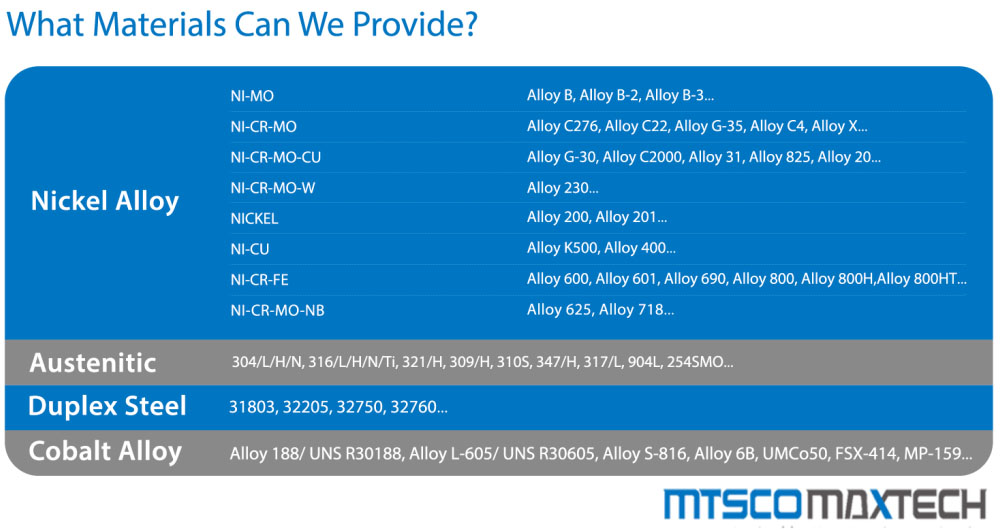
Choosing the appropriate pipeline material is crucial in the industrial battlefield against corrosion, high temperature, and high pressure. The core advantage of MTSCO's welded pipe materials covers three main materials: Austenitic Stainless Steel, Duplex Steel, and Nickel Alloy. They each have their own advantages and work together to ensure the safety and efficiency of industrial systems.
Austenitic welded pipes are an economical and efficient choice for addressing widespread corrosion and hygiene requirements.
Duplex steel welded pipes solve the pain points of high strength and resistance to chloride ion stress corrosion, achieving weight reduction and cost reduction.
Nickel alloy welded pipes provide irreplaceable and reliable protection in the most extreme corrosive, high-temperature, and high-pressure environments.
As A factory complexes supplier, MTSCO is proud of our diverse specifications of welded pipe. We can produce according to standards such as ASTM, EN, GOST, DIN, etc. And our materials covering austenitic, duplex steel, nickel alloy, cobalt alloy, etc.
Standard: ASTM A312/A358/A778/A790/B619 etc.
Dimensions (customisation accepted)
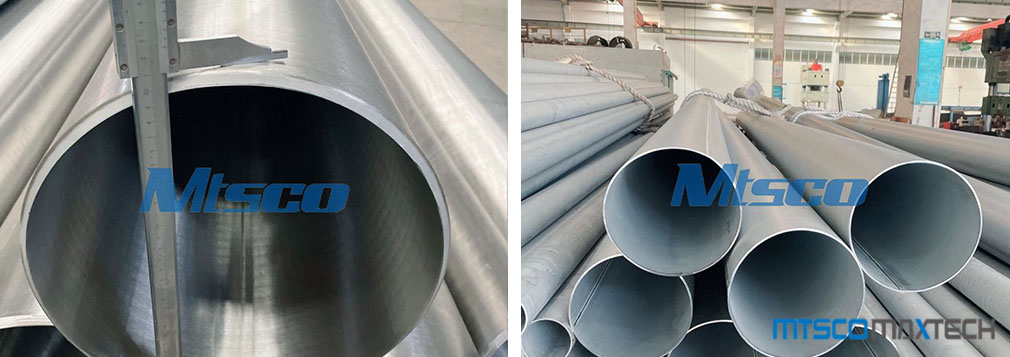
Outer diameter (OD): 219-3000mm
Wall thickness (WT): 4-60mm
Length (LTH)
In addition to regular sizes, we can also customize according to your requirements. Our welded pipes can be up to 3 metres OD, hydrotested up to 1.5 metres OD, and all welded pipes will be 100% filmed.
the cornerstone of corrosion resistance and universality
Corrosion resistance: It mainly relies on the self-healing passivation film formed by chromium to resist corrosion from water, atmosphere, and various chemicals.
Formability and weldability: Easy to process into various shapes and weld.
Hygiene: The surface is smooth and easy to clean, meeting the requirements of food grade and pharmaceutical grade.
Representative grade:
304/304L: Food processing, kitchen and bathroom, building decoration, general chemical pipelines, pharmaceutical auxiliary systems.
316/316L: Adding molybdenum (Mo) significantly improves resistance to pitting corrosion, crevice corrosion, and chloride (seawater). Marine engineering, chemical chlorine containing environment, pharmaceutical core processes, seawater desalination.
Other high-performance grades (such as 321, 904L): meet higher requirements (such as 321 high temperature resistance and sensitization resistance, 904L strong acid/high chlorine resistance).
a strong combination of strength and corrosion resistance
High strength: The strength is nearly twice that of austenitic stainless steel, which can reduce wall thickness, weight, and cost.
Chloride stress corrosion cracking (SCC) resistance: It exhibits much better performance than austenitic stainless steel in chloride containing environments such as seawater and chemical processes.
High resistance to pitting and crevice corrosion: high PREN value (equivalent resistance to pitting corrosion).
Representative grade:
2205: Offshore oil platform structures and pipelines, chemical media containing high chloride ions, petroleum and natural gas, flue gas desulfurization systems, pressure vessels.
2507: Higher strength and corrosion resistance, suitable for more demanding environments.
the ultimate barrier to challenge extreme working conditions
Extreme corrosion resistance: resistant to strong acids, strong oxidants, complex mixed media, seawater, and stable in oxidizing/reducing environments.
High temperature and high pressure resistance: maintain high strength at high temperatures, resist oxidation/carburizing.
Creep resistance and fatigue strength: Suitable for high temperatures and cyclic loads.
Representative grade:
Inconel 625: High strength, creep fatigue resistance, resistance to seawater and various chemical media. Key components of ocean engineering, aviation, high-end chemical industry, flue gas desulfurization, nuclear power.
Hastelloy C-276/C22: Top grade resistance to strong oxidizing acids, pitting corrosion, and crevice corrosion. The most stringent reactors/pipelines in the chemical industry, flue gas desulfurization absorption towers, and wet metallurgy.
Others (such as Incoloy 825, Inconel 600): meet specific high temperature or reducing acid resistance requirements.
- The Value Implementation of Stainless Steel & Nickel Alloy Welded Pipes
| Application Industry | Application Scenario | Warning: Undefined array key 6431 in /home1/j2507171mtscomax/public_html/a1creathtml/tohtml-sswelded.php on line 185 |
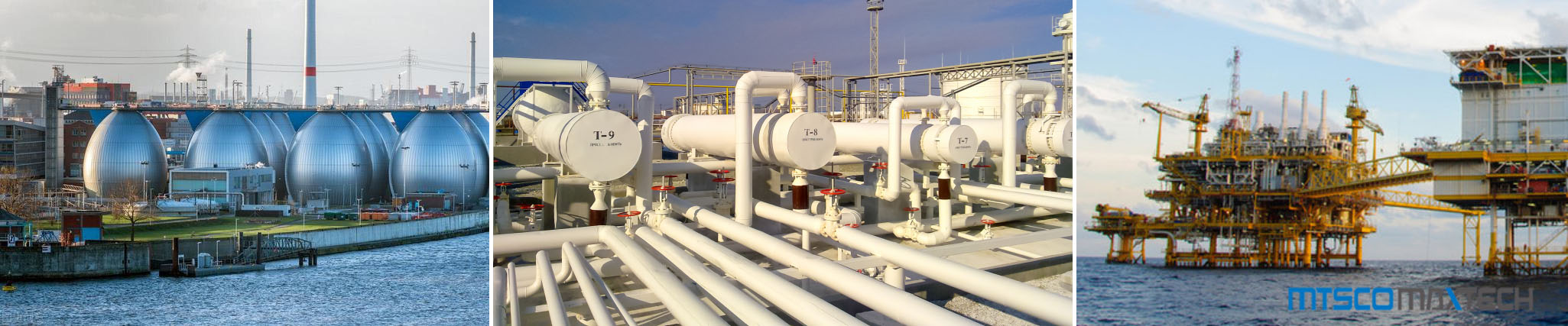
| Petrochemical Industry | Oil/Gas Transmission Pipelines, Core Refining Units, LNG Facilities, Sour Gas (H₂S-containing) Treatment Systems | Excellent weldability and cost-effectiveness, suitable for large-scale transportation |
| Food & Beverage Industry | Sanitary-Grade Piping, Dairy Processing Lines, Aseptic Filling Lines/High-Purity Water Systems, CIP (Clean-in-Place) Piping | Smooth surface for easy cleaning, compliance with strict hygiene standards |
| Energy & Power Industry | Steam Piping in Thermal Power Plants, Heat Exchanger Tubes, Flue Gas Desulfurization (FGD) Systems, Solar Thermal Power, Nuclear Plant Cooling Systems | Withstands high-pressure, high-temperature conditions; stable and reliable welding quality |
| Chemical & Pharmaceutical Industry | Highly Corrosive Media Transfer, High-Purity Chemical Transfer, Reactor/Reactor Connection Pipes, Pharmaceutical Process Piping, Clean Product Transfer Lines | High sterility, prevents contamination and corrosion |
| Marine Engineering | Seawater Cooling Systems, Subsea Pipelines, Offshore Platform Piping, Seawater Desalination Systems | Exceptional corrosion resistance in seawater; reliable sealing performance |
| Environmental Protection & Water Treatment | Wastewater Treatment Plant Piping, Flue Gas Desulfurization/Denitrification (FGD/DeNOx), Wastewater Recovery/Zero Liquid Discharge Systems | Meets extreme corrosion environment requirements; allows on-site processing/connection for retrofit projects |
| Machinery & Structural Applications | Hydraulic/Pneumatic Tubing, Instrumentation Tubing, Equipment Frameworks | Sufficient strength, corrosion-resistant maintenance-free design, aesthetic appearance; easily fabricated into complex structures |
Material performance matching: Stainless steel and nickel alloy welded pipes provide the best material solutions for specific corrosion, temperature, pressure, and cleanliness challenges that carbon steel pipes cannot match.
Advantages of precision manufacturing: Welded pipes, especially those produced using ERW/HFI or EFW/TIG processes, have excellent dimensional accuracy (outer diameter, wall thickness, roundness), which is crucial for ensuring system sealing, heat transfer efficiency, and assembly accuracy.
Thin walled economy: Welded pipes can achieve thinner wall thickness while meeting strength and usage requirements, significantly reducing material costs, system weight, and fluid resistance.
Long continuous length: Welded pipes can produce ultra long fixed lengths (such as 6 meters or even 12 meters or more), greatly reducing the number of joints in the pipeline system, reducing the risk of leakage, and improving installation efficiency and system reliability.
Adaptability and flexibility: The welded pipe process can produce products ranging from extremely small diameters (<10mm) to super large diameters (>1000mm), with various wall thicknesses and different cross-sectional shapes (round pipes, square and rectangular pipes), meeting complex and diverse industrial needs.
Welding process guarantee: For different materials and applications, ERW (efficient and economical, suitable for large quantities) or EFW-TIG (high-quality and pure, suitable for high requirements/special alloys) processes are selected to ensure that the weld performance meets or even exceeds the usage requirements.
- Professional selection guide
Choosing industrial welded pipes is not simply about choosing a size, but a key decision that concerns system safety, lifespan, and cost-effectiveness. Especially for stainless steel and nickel alloy welded pipes, it is necessary to comprehensively consider the working conditions, quality factors, and supplier strength.
Media properties:
What are the ingredients? (Water, oil, acid, alkali, gas, solid slurry?)
Is it corrosive or not? (pH value, oxidizing/reducing properties, presence of hazardous ions such as Cl ⁻, H ₂ S, F ⁻, etc.)? )
Concentration, temperature, and pressure range?
Work environment:
Operating temperature and pressure? Is there any fluctuation or shock?
Does it contain solid particles (risk of wear)? What is the flow rate?
Exposed environment? (Atmosphere, seawater, soil, indoor clean area?)
Regulations and standards:
Industry mandatory regulations? (Petrochemical API, Nuclear ASME, Pharmaceutical FDA/GMP)
Security level? (PED certification for pressure vessels, requirements for pressure equipment)
Cleanliness level? (Food 3-A, Pharmaceutical ASME BPE, Semiconductor Semi)
Cost and expected lifespan:
Project budget? Are you more concerned with initial costs or full lifecycle costs?
Expected lifespan? (5 years, 10 years, 20 years+?)
Material and Certification - Assurance of Authenticity:
Material Certificate (MTC): Must be requested! Check whether the steel grade (such as 316L), furnace number, chemical composition, and mechanical properties meet the standards.
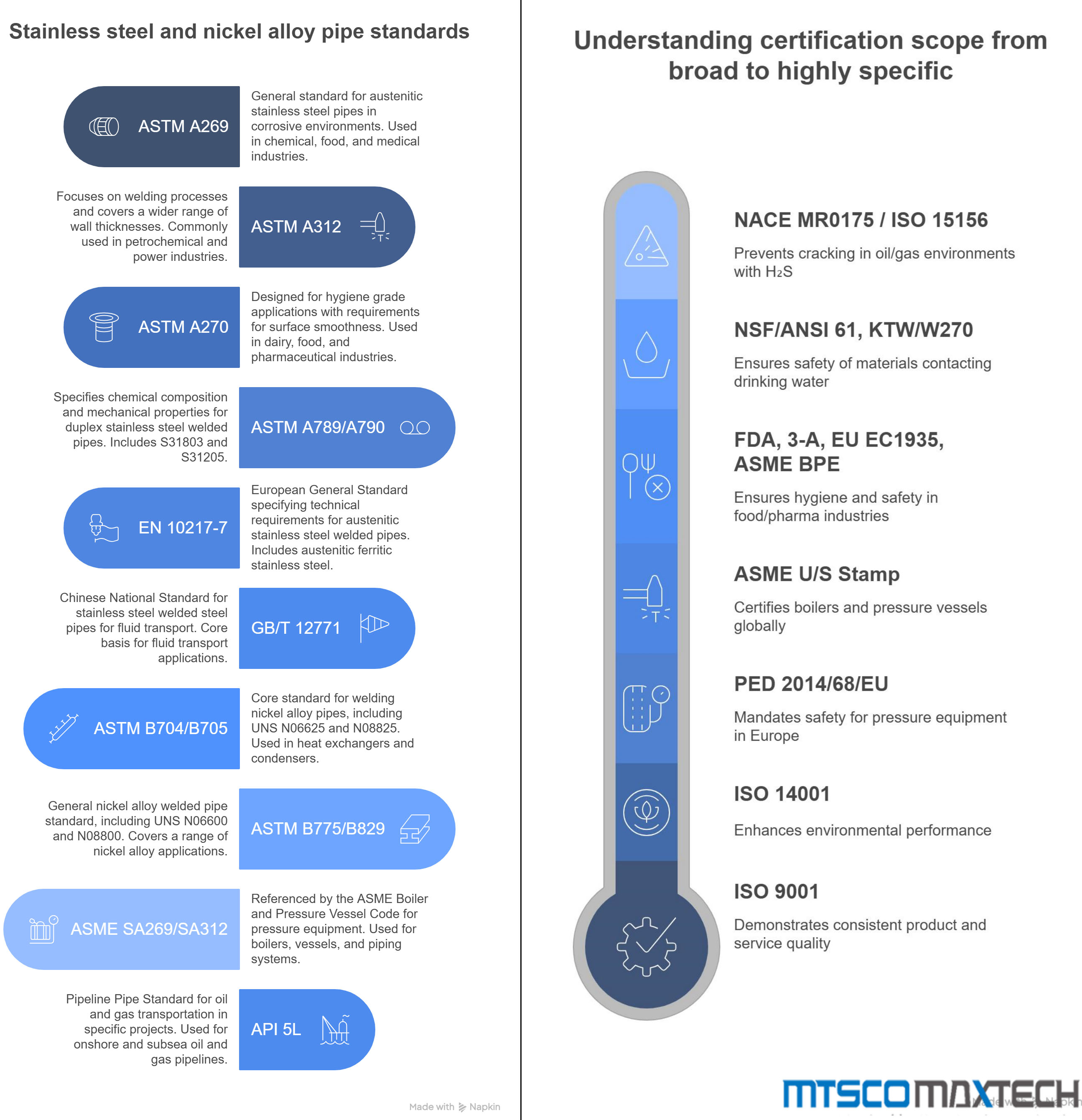
Compliance with standards: Clearly define the international/national standards (such as ASTM A269 (universal stainless steel), ASTM B704 (nickel alloy) EN 10217-7、GB/T 12771).
Special certification: Verification required in harsh environments
Weld treatment (key!): Stainless steel/nickel alloy must undergo solution treatment after welding! Eliminate the deterioration of the heat affected zone and restore corrosion resistance.
Online control: advanced real-time monitoring system for forming and welding parameters (such as laser diameter measurement and weld temperature monitoring).
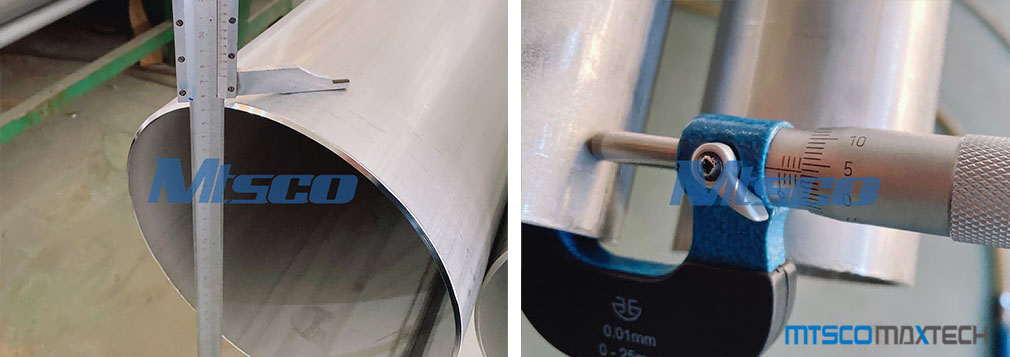
Strict inspection: whether the outer diameter (OD), wall thickness (WT), ellipticity, and straightness meet the order tolerances (such as ASTM A269 wall thickness tolerance ± 10%).
Thin walled pipes require higher precision to avoid installation leaks or insufficient pressure.
Surface quality - the threshold for corrosion resistance and cleanliness: the surface is uniformly silver white, without scratches or pits, and upgraded for special scenarios.
Weld quality - the core lifeline of safety::
Visual inspection: The weld seam is uniform and continuous, without visible cracks, undercutting, or dents.
Non destructive testing (NDT) report is essential::
Eddy current testing (ET): Quickly screen for surface/near surface defects of welds (100% coverage).
Ultrasonic Testing (UT): Detecting internal defects in welds (lack of fusion, porosity, inclusions).
Radiographic testing (RT): X-ray imaging to visually display internal defects (mandatory for high voltage and high-risk conditions).
Hydraulic/pneumatic test: Verify overall sealing and strength (maintain pressure according to standard pressure).
Inspection Report - Quality in black and white, requiring suppliers to provide a complete report
Chemical analysis (Chem)
Mechanical properties (tensile, hardness)
Metallographic examination (microstructure)
Non destructive testing (ET/UT/RT report)
Hydrostatic Test Certificate
(Optional) intergranular corrosion test (such as ASTM A262)
Technical strength: Do you have advanced welded pipe production lines (such as TIG automatic welding, laser welding)? Can special alloys (nickel based, duplex steel) be processed?
Quality System: Has it been certified by ISO 9001? Is there a complete process for raw material storage, process control, and factory inspection?
Industry experience: Are there successful cases of similar working conditions (such as chemical projects, seawater desalination plants)?
Certification capability: Can special certifications such as PED and M650 be provided?
Service support: Do you provide technical consultation, material recommendation, and after-sales tracking? Can we customize the size/polishing as needed?
MTSCO welded pipe have a highly guaranteed supply chain. MTSCO has invested in a factory - HUXIN PIPE, which has 35 years pipe manufacturing experience. MTSCO has reached a high strategic partnership with Huxin, becoming the only international sales center of Huxin. Fully responsible for the global sales and promotion of HUXIN.
In order to solve the problem that you can't visit the factory when you are far away from home, we have specially shot the VR scene of the factory, so that you can inspect the factory in real time on line.
HUXIN has obtained the ISO/PED/AD2000/M650 certificate and is equipped with a complete set of advanced production equipment, inspection equipment, and laboratory instruments, such as CNC bending machine, plate shearing machine, 12m annealing furnaces, pickled pool, ultrasonic eddy current integrated machines, etc. From production to quality assurance, protect your welded pipe. The exclusive cooperation mechanism allows us to collaborate perfectly, increase order volume and production capacity, and provide you products with higher cost-effectiveness
Analysis of Core International Standards
First, secondary inspection of raw materials
Our raw materials come from large factories such as Baosteel, Tisco,TSINGSHAN, Eastern Special Steel... Each batch of raw materials requires MTC and PMI. After the raw materials arrive, we conduct PMI and other inspections again to ensure that they meet the requirements
Second, traceability of the production process
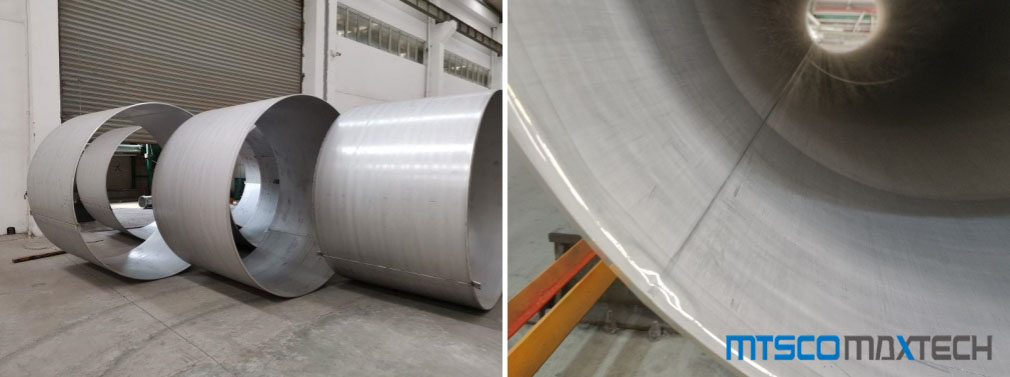
MTSCO welded pipe is mainly formed by rolled plate (RBE) and bending, and the welding adopts PAW+GTAW. The whole process is automatic welding, which makes the welding efficiency increase and the weld seam more full and stable. Huxin's welded pipes have been upgraded in traditional technology, solving the problem of non circular welds in large size welded pipes, and use the 12-meter annealing furnace to make the annealing of the pipe more complete.
Each process is supervised by experienced engineers and technicians. Each link is supervised by professional qc inspectors and photographed for archiving. The entire process uses process cards to ensure accuracy and traceability.
Third, 100% inspection before shipment
MTSCO has professional QC team to conduct a series of inspections and experiments on the pipes, including routine appearance, PMI, size, quantity, and other inspections. At the same time, we also conducts mechanical testing, hardness testing, X-ray test, UT, ET, HT and other tests. Hydrotesting can test pipes with a maximum OD of 630mm, and we also perform 100% X-ray testing of welds. In addition, we also accept third-party inspection, such as SGS, TUV, and BV.
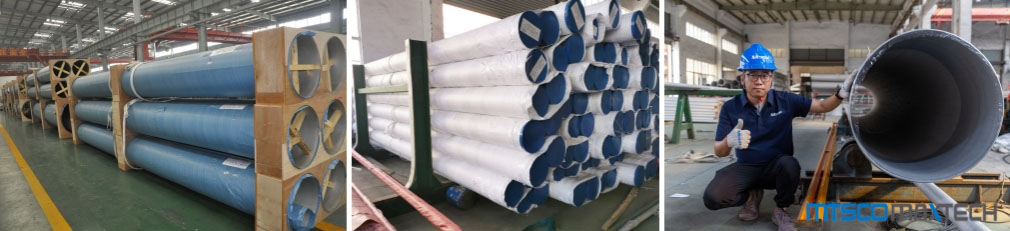
For packing and loading, we also have years of experience. Welded pipe is usually packed in woven bags, large-diameter welded pipe ports supported by wooden frames, the pipe end used cap or tape protection.
We will communicate with you and propose the loading plan, if you accept the casing, for different size pipes, we will use the nesting loading to save transportation cost.
Moreover, the loading are all taken care of by MTSCO QC inspectors, and real-time photo records are kept, with strong traceability.
From acid mist in chemical plants to salt waves on deep-sea platforms, from sterile production lines in pharmaceutical companies to molten salt circuits in solar thermal power stations, every precision welded pipe silently embodies the ultimate pursuit of reliability and performance.
Your harsh working conditions deserve to be matched with more professional pipeline solutions.
What MTSCO deliver is not just pipelines, but also a safety guarantee that runs through the entire lifecycle of the equipment——
Choose depth instead of width. Focusing on industrial welded pipes, we help you weld the future.
[MTSCO] - The ultimate answer to providing metal pipelines for extreme working conditions