

 Español
 عربي
عربي Русский
 한국인
한국인 Português
 Türkçe
 Italiano
 Français
 German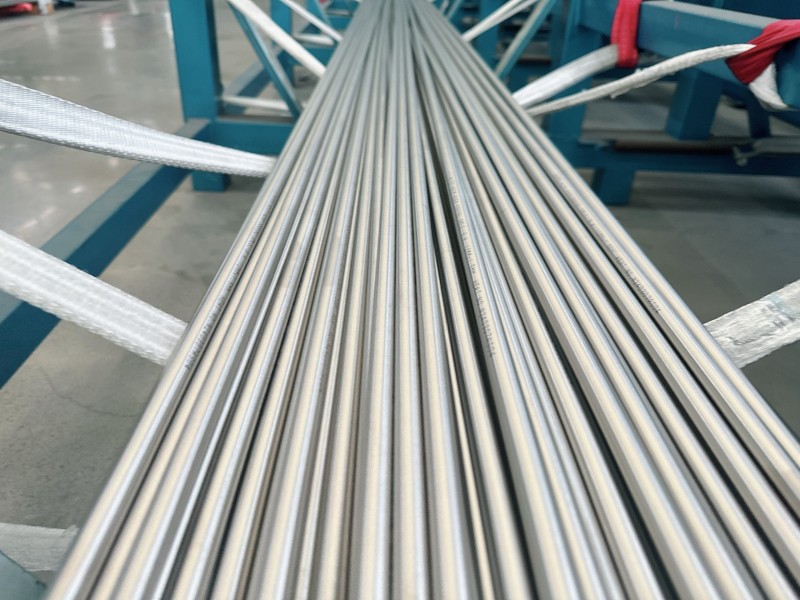
--Materials, standards, and manufacturing explained
Discover what condenser tubes are, common materials like stainless steel, and the complete manufacturing and testing process for optimal heat exchange.
What is a condenser tube?
The stable operation of a condenser largely depends on the tube's ability to effectively remove heat. The condenser tube is installed inside the condenser. When steam or high-temperature gas passes through, heat is transferred through the tube wall to the cooling medium, causing the gas to liquefy. This process seems simple, but the tube material must withstand constant temperature, pressure, and corrosive media; therefore, thermal conductivity, corrosion resistance, and mechanical strength are all crucial.
Common materials include 304/304L, 316/316L austenitic stainless steel, S32205 duplex stainless steel, and titanium alloys. Material selection depends on the medium composition, temperature, pressure, and equipment lifespan. Products are typically manufactured according to standards such as ASTM A249, ASTM A213, or ASTM B338, with different standards corresponding to different materials and manufacturing methods.
How are condenser tubes manufactured?
Taking welded stainless steel condenser tubes as an example, production begins with cold-rolled steel strip. The steel strip is slited and edge-treated, then gradually rolled into a tubular shape by multiple sets of rollers. Next, continuous welding is performed using tungsten inert gas (TIG) welding. The inert gas protects the molten pool, and many specifications omit filler metal to ensure the weld composition closely resembles the base material.
Welding does not mean the tubes are ready for delivery. Solution annealing or bright annealing eliminates internal stresses left from forming and welding, and restores the material's corrosion resistance. Sizing, straightening, and surface treatment follow to control the outer diameter, wall thickness, and straightness within requirements. Clean, uniform tube walls also help reduce fouling and prevent premature degradation of heat exchange efficiency.
Condenser tubes need to be inserted into the tube sheet before expansion or welding. Even slight dimensional deviations can cause assembly problems. The final step is inspection. Eddy current testing is used to find defects in the tube wall and welds, while hydrostatic or airtightness tests check for pressure and leakage risks. Dimensions and surface finishes are also verified for each tube.
When purchasing condenser tubes, one should not only consider the material grade and price. To determine whether a pipe can withstand long-term operation, it's crucial to examine the raw materials, welding, heat treatment, dimensional control, and testing records together.