

 Español
 عربي
 Русский
 한국인
 Português
 Türkçe
 Italiano
 Français
 German
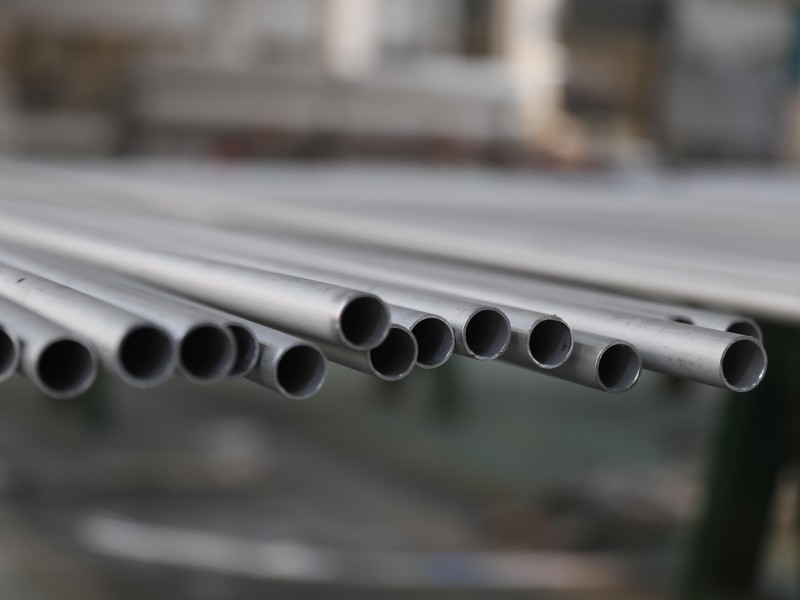
Discover the properties, ASTM B444 specifications, and key considerations for using Inconel 625 (UNS N06625) seamless pipes in boilers and heat exchangers.
Inconel 625 (UNS N06625) is commonly used in equipment where temperature, pressure, and corrosion coexist. This nickel-chromium-molybdenum-niobium alloy boasts high strength and resistance to various corrosive media, allowing for the fabrication of seamless pipes and tubes for applications in marine engineering, chemical plants, high-temperature heat exchangers, and some boiler-related equipment. However, even with superior material properties, it's crucial to ensure that product standards align with equipment design.
What does ASTM B444 specify?
ASTM B444 applies to seamless pipes and tubes made of nickel alloys such as UNS N06625, specifying chemical composition, mechanical properties, dimensional tolerances, heat treatment conditions, and testing requirements. It is a pipe product standard, not specifically for boiler tubes. Whether N06625 Tube conforming to B444 can be used in boilers or high-temperature heat exchangers depends on the design temperature, pressure, structural location, and the corresponding boiler or pressure equipment specifications.
Different grades and supply conditions in the standard may correspond to different mechanical properties; therefore, when requesting a quote, you cannot simply write "Alloy 625 + ASTM B444". The product form, grade, dimensions, heat treatment condition, and testing requirements should all be clearly stated. If the project has additional requirements for corrosion testing, cleanliness, or end processing, these should also be included in the technical agreement in advance to avoid adding them after the product is completed.
Why is Alloy 625 suitable for harsh environments?
Chromium helps the material resist high-temperature oxidation, molybdenum improves resistance to pitting and crevice corrosion, and niobium, together with molybdenum, strengthens the nickel matrix, allowing Alloy 625 to maintain high strength without complex aging treatments. This composition combination makes it stable in seawater, chlorinated media, and various chemical environments, while also being adaptable to a wide temperature range.