

 Español
 عربي
عربي Русский
 한국인
한국인 Português
 Türkçe
 Italiano
 Français
 German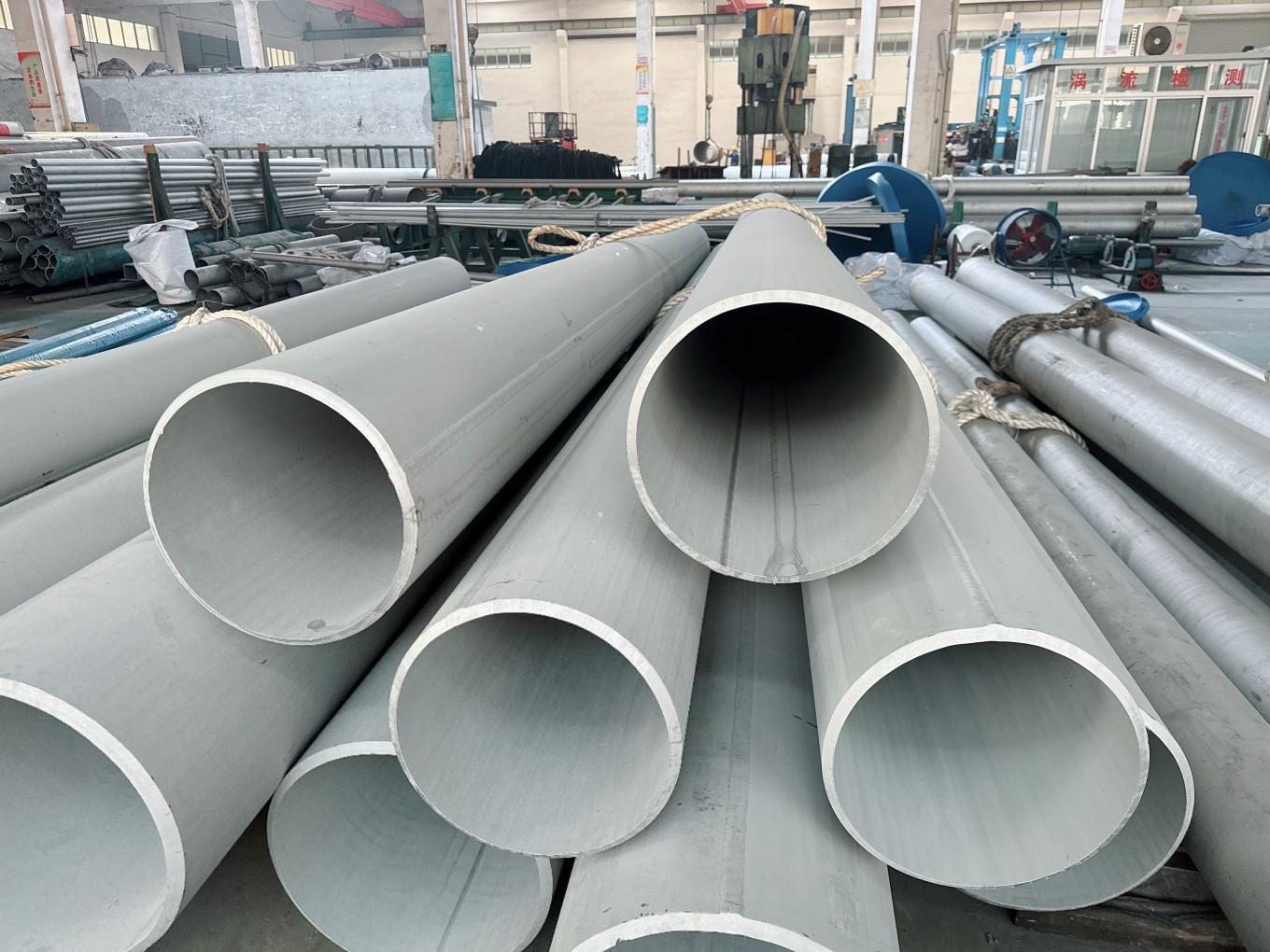
--A Complete Overview of EFW Pipe Strengths, Standards, and Industrial Applications
Learn how EFW pipes deliver strength, corrosion resistance, and cost efficiency for oil, gas, and chemical projects—fully compliant with ASTM and ISO standards.
This article will systematically analyze the technical characteristics, core advantages, and application areas of EFW Pipe (Electric Fusion Welded Pipe), providing selection references for EPC general contractors and industrial project parties, and assisting in the construction of efficient and reliable pipeline systems under complex working conditions.
Benefits
EFW pipe refers to the process of using Electric Fusion Welding to roll stainless steel or nickel alloy steel plates into pipes and weld them along longitudinal seams. Compared with ERW (resistance welding), EFW is suitable for thick walled and large-diameter pipelines, with complete weld penetration and high strength.
Manufacturing standards: ASTM A358 or ASTM A671/A672, etc.
Core advantages:
Strong adaptability to large caliber
low cost
The structural strength meets the pressure bearing requirements
Strong corrosion resistance
Application
Oil and natural gas: used in oil and gas gathering and transportation pipelines, refinery process pipelines, and has been applied in refinery projects in the Middle East and South America;
Chemical and paper-making: Suitable for transporting acidic and alkaline media, connecting pipelines to reaction vessels, and withstanding high temperature and high pressure conditions;
Desalination of seawater: As the main pipeline for seawater transportation, it is resistant to corrosion in the marine environment;
Power engineering: used for steam pipelines and cooling water systems in thermal power plants.
Selection suggestions
1. Material matching: Based on the characteristics of the medium, MTSCO can provide full material customization. The raw materials come from large steel mills such as Baosteel, Tisco, TSINGSHAN, etc. Before being stored, they undergo secondary PMI testing to ensure that the material purity and corrosion resistance meet the standards.
2. Welding quality control: MTSCO holds ISO certification, with a QC team monitoring the entire welding process, providing VR factories, and supporting SGS third-party testing and verification.
3. Installation specifications: When connecting pipelines, welding materials of the same material should be used, and a hydrostatic test should be conducted after installation; The MTSCO EFW pipeline has been validated by international clients such as Petrobras and PetroNAS, with a one-time pass rate of 100% for hydrostatic testing, and is suitable for installation requirements of multiple standards such as ASTM/EN/GOST.