

 Español
 عربي
عربي Русский
 한국인
한국인 Português
 Türkçe
 Italiano
 Français
 German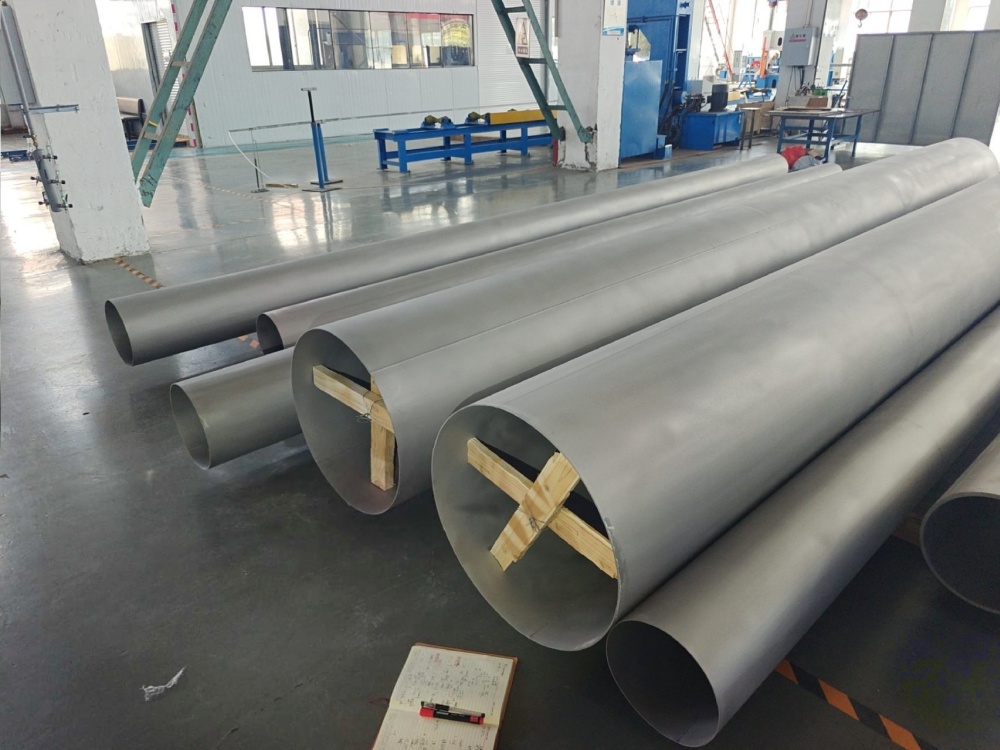
--Key Specs for Corrosive & High-Temp Applications
Explore the ASTM A358/ASME SA358 standard for EFW stainless steel pipes. Learn about material grades, the 5-class system, and key industrial applications.
 ASTM A358 Standard Specification PDF Download
ASTM A358/ASME SA358 is a key specification for electrofusion welded (EFW) austenitic chromium-nickel stainless steel pipes, designed specifically for high-temperature and corrosive industrial applications. Understanding this standard helps ensure the safety and reliability of piping systems under harsh conditions.
Core Specifications and Material Coverage
Electrofusion welding is a welding method that uses the heat of an electric arc to melt the base metal and filler metal to form a weld, enabling the efficient manufacture of large-diameter pipes. This standard primarily covers pipes manufactured using the electrofusion welding process and is applicable to various austenitic stainless steel grades, such as TP304/304L, TP316L, TP310S, TP321, and TP347. These materials possess excellent corrosion resistance and high-temperature strength.
Key Technology Classification
A significant feature of the A358 standard is its class system, which is divided into five classes (Class 1 to Class 5). These classes are primarily differentiated based on the weld manufacturing process and non-destructive testing requirements. For example, Class 1 welded pipes require double-sided welding and 100% radiographic (RT) inspection of the weld, ensuring the highest weld quality and integrity. The choice of class depends on the specific pressure, temperature, and safety requirements of the application.
Main Application Areas
Due to their excellent high-temperature and corrosion resistance, electrofusion welded pipes conforming to the ASTM A358 standard are widely used in industries such as petrochemicals, chemical processing, oil refineries, and power generation. In these scenarios, piping systems need to withstand long-term exposure to high-temperature fluids and corrosive media; therefore, selecting qualified products that meet this standard is fundamental to ensuring production safety and equipment lifespan.