

 Español
 عربي
 Русский
 한국인
 Português
 Türkçe
 Italiano
 Français
 German
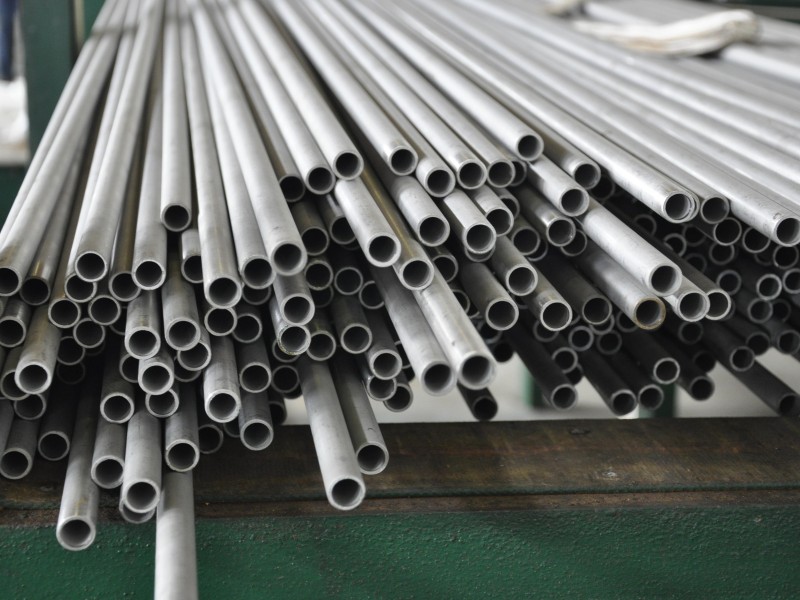
Discover the requirements of ASTM B163 for seamless nickel alloy condenser and heat exchanger tubes, ensuring reliable performance in harsh environments.
What materials does ASTM B163 cover?
The standard covers nickel and nickel alloys such as Nickel 200/201, Monel 400, Alloy 600, some Alloy 800 series, and Alloy 825, and applies to seamless tubes with an outer diameter not exceeding 3 inches. Different grades are delivered in specified annealed, stress-relieved, or cold-worked conditions, and products are also categorized by average wall thickness and minimum wall thickness requirements. If procurement documents only list material names without specifying wall thickness type and delivery condition, misunderstandings can easily arise during subsequent inspections.
ASTM B163 heat exchanger tube
When ASTM B163 appears on a heat exchanger drawing, it refers not just to a specific nickel alloy grade, but to a complete set of requirements for seamless condenser tubes and heat exchanger tubes. Tubes need to penetrate tube sheets and continuously separate hot and cold media; even slight fluctuations in outer diameter or surface defects can affect expansion joints, welding, and subsequent sealing. Therefore, this standard often pays more attention to dimensional consistency and delivery condition than standard process pipes.
Details that truly affect assembly: For heat exchanger tubes to be smoothly threaded and reliably connected to the tube sheet, outer diameter, wall thickness, straightness, and end condition must be stable. ASTM B163 also specifies chemical composition, tensile properties, hardness, etc.; specific items can be added according to equipment requirements, such as eddy current, ultrasonic, or hydrostatic testing, to detect cracks, pinholes, and localized wall thickness anomalies. Testing items should be determined before ordering, not added after product completion.
Material selection must still be based on the actual medium. Monel 400 is suitable for some seawater and hydrofluoric acid environments, while Alloy 825 performs more consistently in acidic and chlorine-containing media, but no grade can be judged in isolation from temperature, concentration, and flow rate. Only by confirming the material, tube sheet assembly, cleaning method, and allowable corrosion margin together can ASTM B163 truly become the foundation for reliable heat exchanger operation.