

 Español
 عربي
 Русский
 한국인
 Português
 Türkçe
 Italiano
 Français
 German
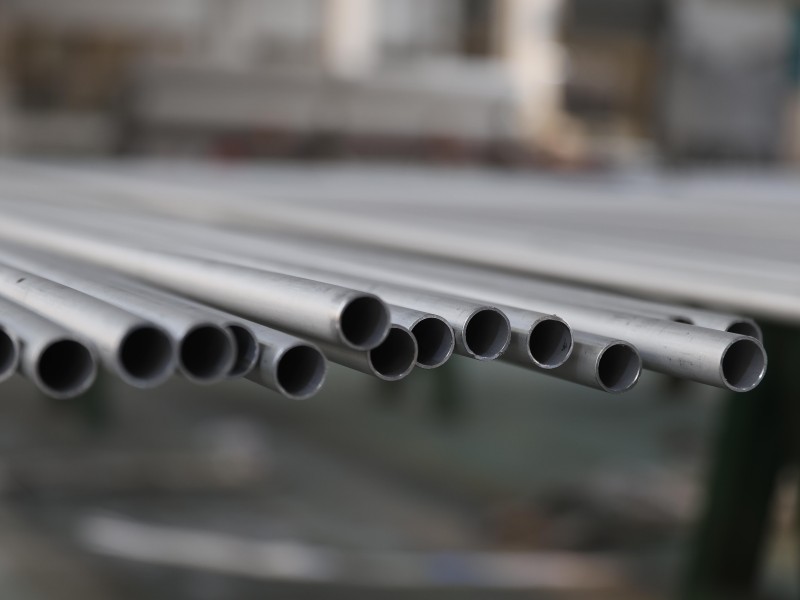
--Properties and Marine Applications of Monel 400
Discover the properties, standards, and ideal applications of UNS N04400 Monel 400 tubing in marine, chemical, and heat exchanger systems.
Monel 400 (UNS N04400) is an early and typical nickel-copper alloy used in industry. It is primarily nickel-based with a high proportion of copper, exhibiting stable performance in seawater, brine, caustic alkalis, and some acidic environments. Its good toughness and machinability have made it a long-standing favorite in marine piping, marine equipment, heat exchangers, and chemical transport systems.
Its advantages also have limitations.
Monel 400 is a solid solution-strengthened alloy; its strength cannot be significantly improved by conventional precipitation aging, but its mechanical properties can be improved through cold working. The nickel-copper matrix has good resistance to flowing seawater, neutral salt solutions, and caustic alkalis, and can also handle hydrofluoric acid under suitable conditions. When encountering strong oxidizing acids or media containing strong oxidants, a reassessment is necessary; "seawater resistance" should not be simply interpreted as "resistance to all corrosion."
Different products require different standards. Cold-worked seamless pipes and tubes often use ASTM B165; seamless tubes for condensers and heat exchangers can use ASTM B163. Even with the same grade, changes in product form or application will alter dimensions, heat treatment conditions, performance, and inspection requirements beyond just chemical composition. Therefore, procurement documents should clearly state UNS N04400, product type, and applicable standard.
Monel 400 is commonly used in seawater pumps and valves, marine piping, brine systems, evaporators, heat exchangers, and some acid treatment equipment. It performs well in flowing seawater, but localized corrosion may still occur in low-flow-rate, dead-end, or sediment-covered areas. Material selection should also consider temperature, oxygen content, flow rate, and galvanic corrosion after connection with other metals, and compare it with 316L, duplex steel, or other nickel alloys in conjunction with cleaning conditions.
Processing and acceptance also affect performance. Cold working increases strength, but also alters plasticity and subsequent forming capabilities; therefore, the appropriate condition should be selected according to the equipment manufacturing plan. Upon arrival, in addition to verifying the MTC (Mean Transmission Control Certificate), the dimensions, surface finish, and markings should also be checked. When used in heat exchangers, eddy current or hydrostatic testing can be added according to project requirements to reduce the risk of early leakage.