

 Español
 عربي
عربي Русский
 한국인
한국인 Português
 Türkçe
 Italiano
 Français
 German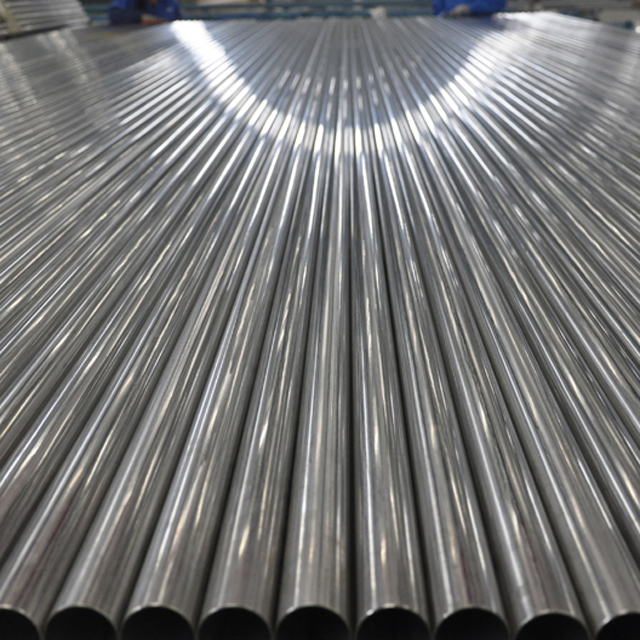
——High-Performance Nickel-Chromium-Iron Alloy Tubing for Extreme Environments
ASTM B516 specifies welded Inconel 600/601 tubing, known for superior oxidation resistance, mechanical strength, and corrosion resistance in high-temperature applications across industries like aerospace, chemical processing, and marine engineering.
ASTM B516 is the standard specification for welded nickel-chromium-iron alloy tubing, UNS N06600 (Inconel 600) and UNS N06601 (Inconel 601), which provides excellent strength, oxidation resistance, and the ability to withstand extreme conditions. Welded tubing produced according to the ASTM B516 standard is used in a wide range of high-temperature and corrosion-resistant environments.
Chemical Composition and Mechanical Properties
Inconel 600 (UNS N06600) is a nickel-chromium-iron alloy with excellent corrosion resistance and high-temperature strength. The main chemical composition includes
Nickel (Ni): ≥72% - for corrosion resistance and high-temperature performance.
Chromium (Cr) 14-17% - enhances oxidation and corrosion resistance.
Iron (Fe) 6-10% - increases structural integrity.
Inconel 601 (UNS N06601) has a higher aluminum content and is more resistant to oxidation than Inconel 600 (UNS N06600).
Mechanical Properties:
Tensile strength: 550 MPa (Inconel 600), 650 MPa (Inconel 601).
Yield strength: 240 MPa (Inconel 600), 310 MPa (Inconel 601).
Elongation 30% (Inconel 600), 25% (Inconel 601).
Advantages of Inconel 600/601 welded steel tubes
Inconel 600/601 welded steel pipe has good resistance to chloride ion stress corrosion cracking, high mechanical strength and thermal stability, and excellent oxidation and corrosion resistance in extreme environments.
Common Applications
Inconel 600/601 welded tubing manufactured to ASTM B516 standards, whether used in chemical plants, aerospace or marine applications, these alloys ensure long-lasting performance in demanding environments.
Marine & Offshore: Resistant to seawater corrosion and high temperature exposure.
Chemical Processing: Piping systems, reactors and storage vessels for handling acidic and corrosive substances.
Heat exchangers: withstand high temperatures and corrosive environments.
Nuclear reactors: for steam generation systems and cooling circuits.
Aerospace industry: for exhaust pipes, jet engine components and structural applications.