

 Español
 عربي
عربي Русский
 한국인
한국인 Português
 Türkçe
 Italiano
 Français
 German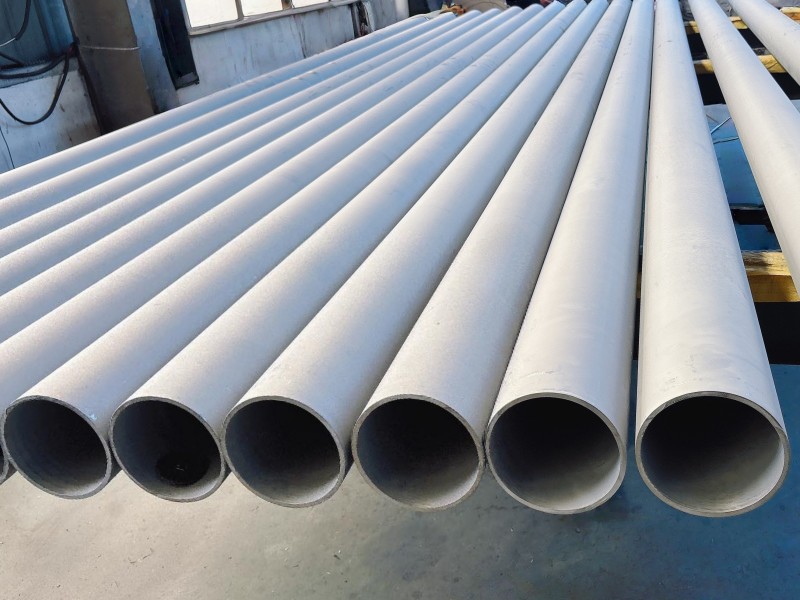
--Your Guide to Corrosion & Heat Resistance
Discover the core advantages of nickel alloy pipes, including superior corrosion resistance and high-temperature strength for demanding industrial applications.
Nickel Alloy Pipes
Nickel alloy pipes are critical materials designed for extreme industrial environments. Their superior overall performance makes them ideal for ensuring the safe and stable operation of equipment under harsh conditions. This article will explore the core advantages of nickel alloy pipes and their application value in key industrial sectors.
Superior Corrosion Resistance
The most significant characteristic of nickel alloy pipes is their excellent corrosion resistance. Compared to traditional stainless steel, nickel-based alloys maintain stability in a wider range of more complex corrosive media. For example, in environments containing chloride ions, hydrogen sulfide, strong acids, or strong alkalis, nickel alloy pipes effectively resist pitting corrosion, crevice corrosion, and stress corrosion cracking. Common grades such as Alloy 625 (UNS N06625) perform excellently in seawater and various acidic environments, while Alloy 825 (UNS N08825) exhibits good resistance to both reducing and oxidizing acids such as sulfuric acid and phosphoric acid. This property makes it an indispensable material in industries such as chemical processing, marine engineering, and oil and gas extraction.
Excellent High-Temperature Strength and Stability
In high-temperature environments, the mechanical properties and structural stability of materials are crucial. Nickel alloy pipes maintain sufficient strength and creep resistance even at temperatures reaching hundreds or even thousands of degrees Celsius. They are not easily oxidized at high temperatures, forming a dense and stable oxide film that protects the base metal from further corrosion. This advantage makes nickel alloy pipes widely used in combustion chamber components of aerospace engines, piping systems of industrial heating furnaces, and superheater and reheater piping in power plants, ensuring long-term reliable operation of equipment under high-temperature conditions.
Key Industrial Applications
With its unique combination of properties, nickel alloy pipes play a central role in several demanding industrial sectors. In the oil and gas industry, they are used to handle high-sulfur acidic gases and high-salinity formation fluids. In chemical processing, they are critical pipelines for transporting corrosive chemicals. In the aerospace industry, their lightweight and high-strength characteristics meet the stringent requirements of engine weight reduction and high-temperature resistance. Furthermore, nickel alloy pipes are also highly favored in seawater desalination, nuclear power, and pollution control equipment due to their long service life and high reliability.
In summary, nickel alloy pipes, with their irreplaceable corrosion resistance and high-temperature performance, provide a high-performance and durable solution to some of the most challenging material problems in modern industry, and are a crucial guarantee for improving the reliability and extending the service life of critical equipment.