

 Español
 عربي
 Русский
 한국인
 Português
 Türkçe
 Italiano
 Français
 German
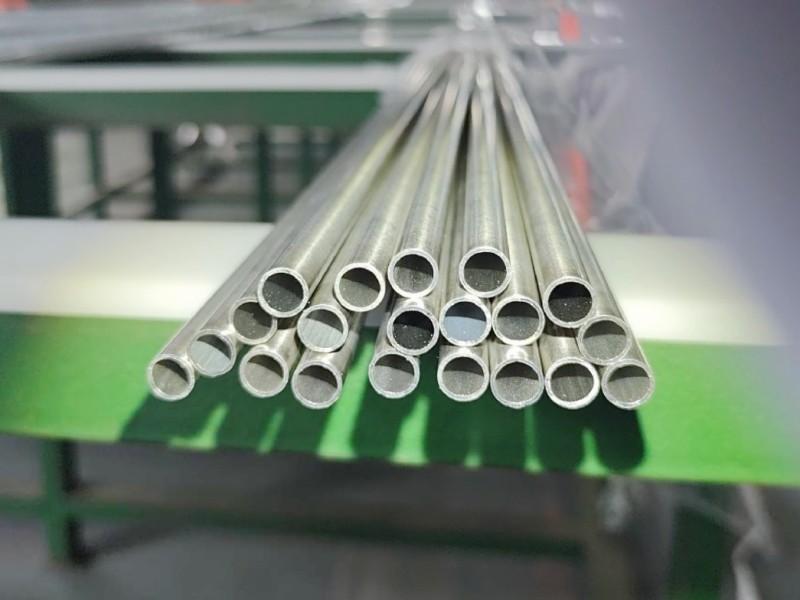
--Nickel Alloy Pipe and Tube Selection Guide
Compare common nickel alloys, pipe vs tube differences, standards, and purchasing tips for demanding industrial applications.
Nickel alloy Pipe and Tube are widely used in chemical processing, oil and gas, marine engineering, and energy equipment. Compared with ordinary stainless steel, nickel alloys often have advantages in complex environments such as high temperature and severe corrosion. However, there are many types of nickel alloys, and material selection still depends on the specific medium and operating conditions.
What are the common nickel alloys?
Common nickel alloys used in industry include Alloy 600, 625, 825, C276, and Monel 400, and different grades have their own characteristics.
Alloy 625 has strong resistance to pitting corrosion and crevice corrosion and is suitable for marine engineering and chemical systems. Alloy 600 has good high-temperature oxidation resistance and is often used in heating equipment and heat exchangers. Alloy 825 has certain advantages in acidic environments such as sulfuric acid and phosphoric acid, while C276 is more suitable for a variety of highly corrosive media. Monel 400 is commonly found in seawater and some alkaline media environments.
What is the difference between Pipe and Tube?
Nickel alloy Pipe is mainly used for industrial fluid transportation and is usually selected according to nominal pipe diameter and wall thickness series. Tube focuses more on outside diameter, wall thickness, and dimensional accuracy and is often used in heat exchangers, condensers, and instrumentation systems.
The manufacturing method also needs to be distinguished. Seamless Pipe and Seamless Tube have no longitudinal weld, while welded products are usually formed from plate or strip and then welded. The two processes each have their applicable scenarios, and product quality cannot be judged solely by whether a weld exists.
What should be considered when purchasing?
Different nickel alloys correspond to different product standards. For example, Alloy 625 seamless Pipe and Tube often use ASTM B444, Alloy 825 can refer to ASTM B423, and C276 commonly uses ASTM B622.
When purchasing, the material grade, manufacturing method, dimensions, heat treatment condition, and inspection requirements should be specified. For projects with stronger corrosiveness or higher pressure, the material applicability also needs to be confirmed in combination with actual operating conditions.
The purchase cost of nickel alloys is usually higher than that of ordinary stainless steel, but under suitable operating conditions, their corrosion resistance and high-temperature resistance help reduce equipment maintenance and replacement frequency.