

 Español
 عربي
 Русский
 한국인
 Português
 Türkçe
 Italiano
 Français
 German
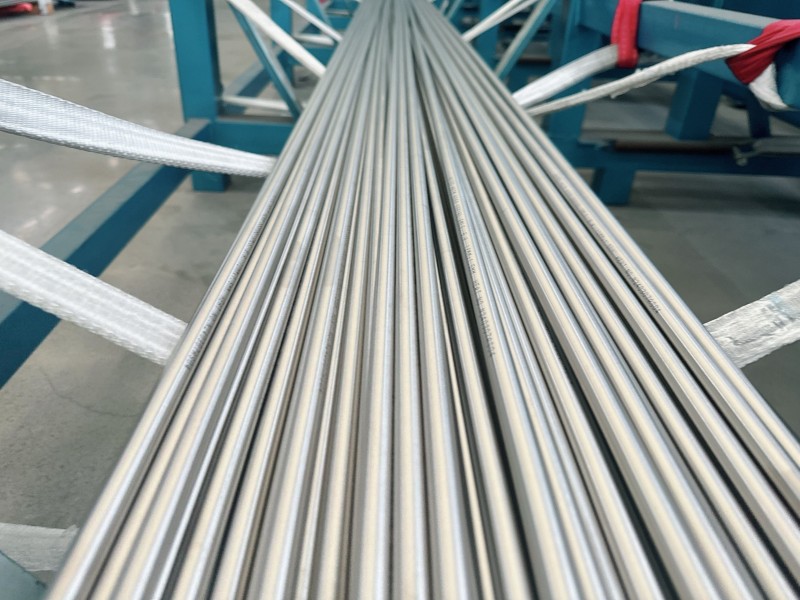
--Monel 400 properties, B165 standards, and marine uses
Learn how Monel 400 seamless pipes and tubes resist seawater and chemical corrosion, and how ASTM B165 specifications guide selection.
Monel seamless Pipe and Tube are industrial tubular products made from nickel-copper alloy and are often used in corrosive environments such as seawater, chemical processing, and oil and gas. Monel 400 is one of the most common grades. It has good corrosion resistance and mechanical properties, and is worth considering in applications where ordinary stainless steel cannot be used reliably over the long term.
What are the characteristics of Monel seamless pipe and tube?
Compared with ordinary stainless steel, Monel 400 performs more consistently in certain marine environments. However, localized corrosion may still occur when seawater flow is too low or deposits are present, so service life cannot be judged by material grade alone.
Monel 400 (UNS N04400) consists mainly of nickel and copper, with nickel content usually no less than 63%. This alloy has good corrosion resistance in seawater, neutral salt solutions, alkaline solutions, and some reducing acids.
Common standards and product types
ASTM B165 is a commonly used product standard for Monel 400 seamless Pipe and Tube, specifying requirements for material properties, dimensions, and inspection.
Seamless products have no longitudinal weld, but the quality of the pipe body still needs to be confirmed through appropriate testing.
Pipe is generally selected by nominal pipe size and wall thickness series and is mainly used for fluid conveyance; Tube places greater emphasis on outside diameter and wall thickness accuracy and is often used in heat exchangers, condensers, and instrumentation systems.
Where are Monel seamless pipes mainly used?
Monel seamless Pipe and Tube are commonly used in seawater cooling systems, offshore engineering equipment, chemical pipelines, and heat exchangers. For projects that need to consider corrosion resistance, mechanical strength, and long-term operating stability together, this material has certain advantages.
When purchasing, the specific UNS grade, applicable standard, dimensions, heat treatment condition, and inspection requirements should be confirmed. Especially in high-temperature, oxygen-containing acidic media, or complex seawater environments, the actual corrosion conditions also need to be evaluated to avoid a mismatch between material selection and service environment.