

 Español
 عربي
 Русский
 한국인
 Português
 Türkçe
 Italiano
 Français
 German
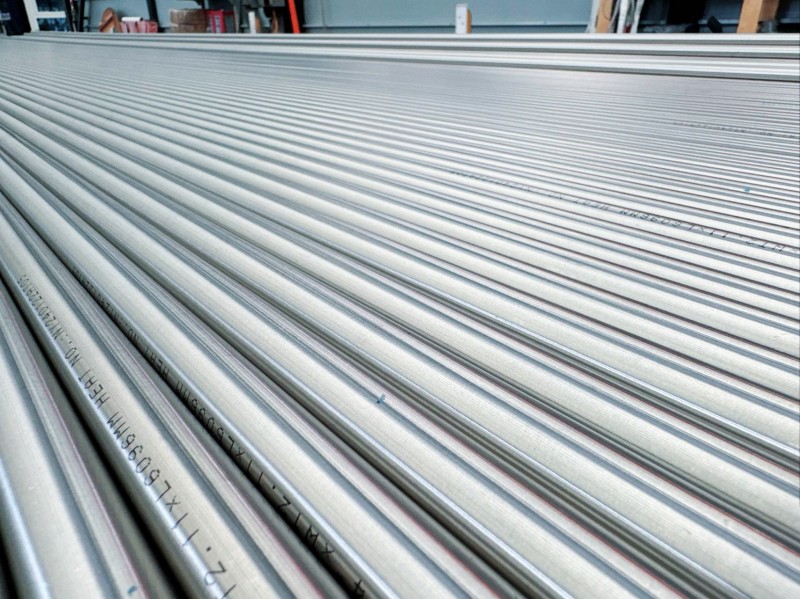
--Inconel Grade and Operating Condition Guide
Learn how to select Inconel alloy tubing by grade, operating conditions, standards, and procurement requirements for reliable high-temperature and corrosive service.
When selecting Inconel alloy Tube, the most important thing is to determine what kind of operating environment the material will be exposed to. Inconel belongs to the nickel-based high-performance alloy family and offers certain advantages under high-temperature, corrosive media, and high-pressure conditions. However, the properties of different grades vary considerably, so selection should not rely only on the name Inconel.
How should common Inconel alloys be selected?
Common grades in industry include Inconel 600, 625, 690, and 718.
Inconel 690 has a relatively high chromium content and performs well in high-temperature oxidizing environments. Inconel 718 is known for its high strength and is often used in aerospace and energy equipment that requires high mechanical performance.
Inconel 600 has good resistance to high-temperature oxidation and is often used in heating equipment and heat exchangers. Inconel 625 contains molybdenum and niobium, has relatively high strength, and offers good resistance to pitting and crevice corrosion caused by chlorides, making it suitable for marine engineering and chemical equipment.
Which operating conditions require particular attention?
When selecting materials, operating temperature, pressure, and media composition should generally be considered together.
For example, seawater or chloride-containing media require greater attention to local corrosion risks, while high-temperature heat exchange systems need to account for the effects of oxidation, creep, and thermal cycling. If high temperature and corrosion are present at the same time, the long-term performance of different grades should also be compared further.
Standards and procurement requirements cannot be ignored
Different Inconel alloys correspond to different product standards. For example, Inconel 600 seamless Pipe and Tube can refer to ASTM B167, while Inconel 625 seamless Pipe and Tube commonly use ASTM B444.
During procurement, the UNS grade, outer diameter, wall thickness, length, heat treatment condition, and inspection requirements should be clearly specified. For heat exchangers or high-pressure instrument systems, dimensional accuracy, surface quality, and hydrostatic or non-destructive testing results should also be considered.
Inconel alloys are usually costly, so actual application requirements should also be considered during selection. Only by choosing a grade with suitable performance can equipment reliability and long-term operating costs be balanced.