

 Español
 عربي
 Русский
 한국인
 Português
 Türkçe
 Italiano
 Français
 German
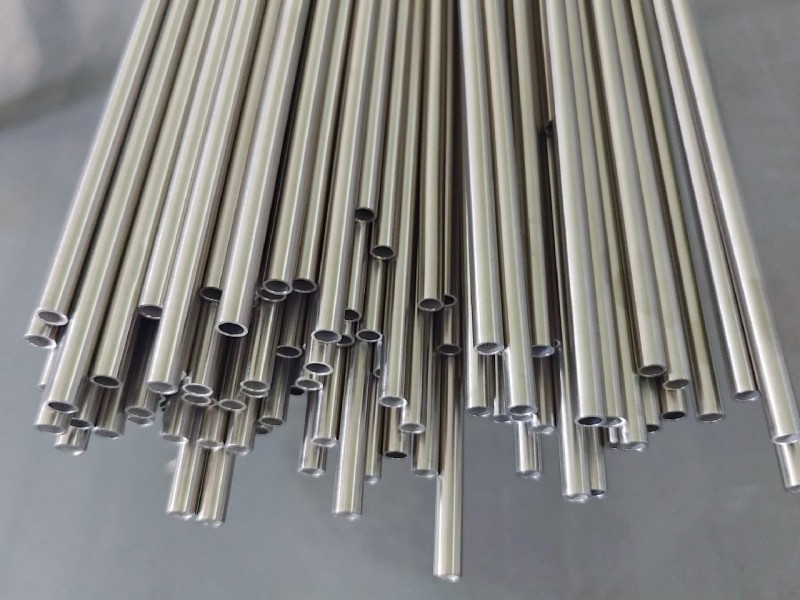
--Incoloy 800 tube selection and acceptance guide
Learn Incoloy 800 UNS N08800 properties, ASME SB 163 tube applications, and key purchasing and acceptance checks for high-temperature service.
In high-temperature heat exchangers and condensers, Incoloy 800 is a relatively common nickel-iron-chromium alloy. It balances heat resistance and corrosion resistance, but in actual use, whether it is suitable still needs to be judged based on operating temperature, medium, and applicable standard.
What is Incoloy 800?
Incoloy 800 corresponds to UNS N08800 and has nickel, iron, and chromium as its main components. It has good resistance to high-temperature oxidation and carburization, as well as good fabricability.
ASME SB 163 mainly applies to seamless nickel and nickel alloy condenser tubes and heat exchanger tubes, and sets requirements for material composition, mechanical properties, dimensions, and inspection.
Note that although Incoloy 800, 800H, and 800HT belong to the same series, their high-temperature performance and applicable requirements differ, so they cannot be directly substituted for one another.
Which equipment uses Incoloy 800?
This material is often used in high-temperature heat exchangers, chemical heating equipment, and heat treatment equipment. It is particularly suitable for environments that require both heat resistance and corrosion resistance.
However, if the medium contains corrosive components such as sulfides and chlorides, further judgment is needed based on temperature, concentration, and operating conditions.
What should be noted during procurement and acceptance?
When purchasing ASME SB 163 seamless Tube, the UNS N08800 grade, outside diameter, wall thickness, length, and heat treatment condition should be clearly specified.
Since heat exchanger tubes may subsequently require expansion or welding, wall thickness uniformity, roundness, and surface quality also deserve attention. For testing, hydrostatic test, non-destructive testing, and other items should be confirmed in accordance with the standard and project requirements, and the material certificate and heat number should be checked.
Confirming these details in advance can reduce dimensional deviations after delivery, installation rework, and quality disputes.